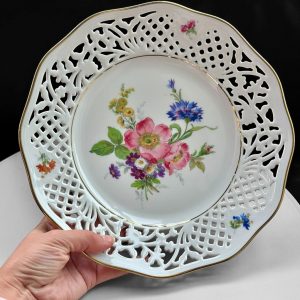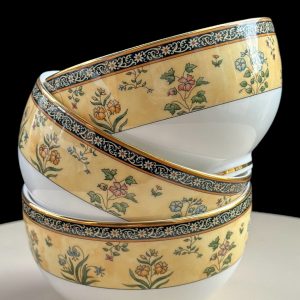
Herend Porcelain Manufactory
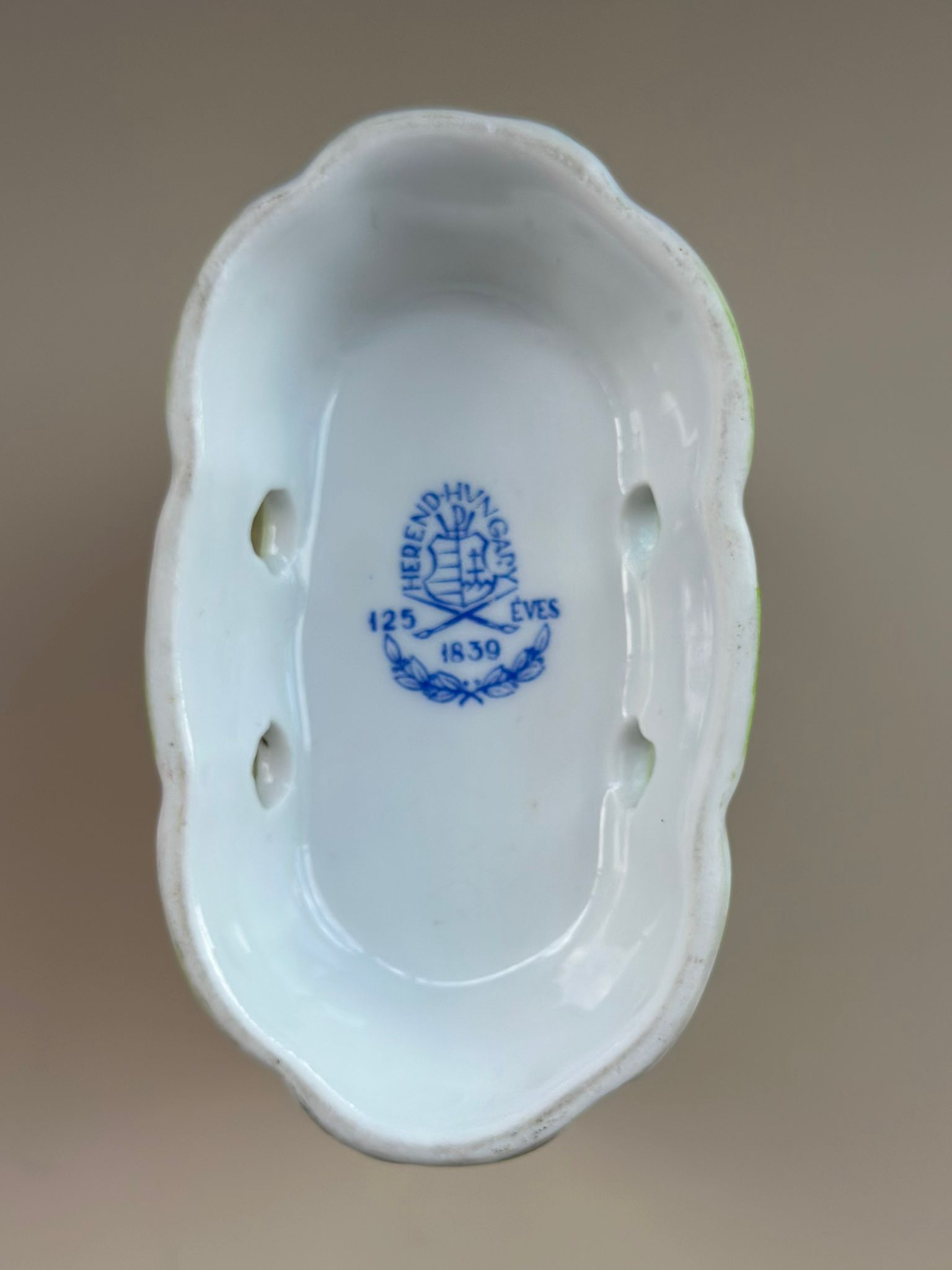
- Location: Herend, Hungary.
- Establishment: The factory was officially founded in 1826 by Vince Stingl, though it was Miklós Fischer who truly elevated its status after taking it over in 1839.
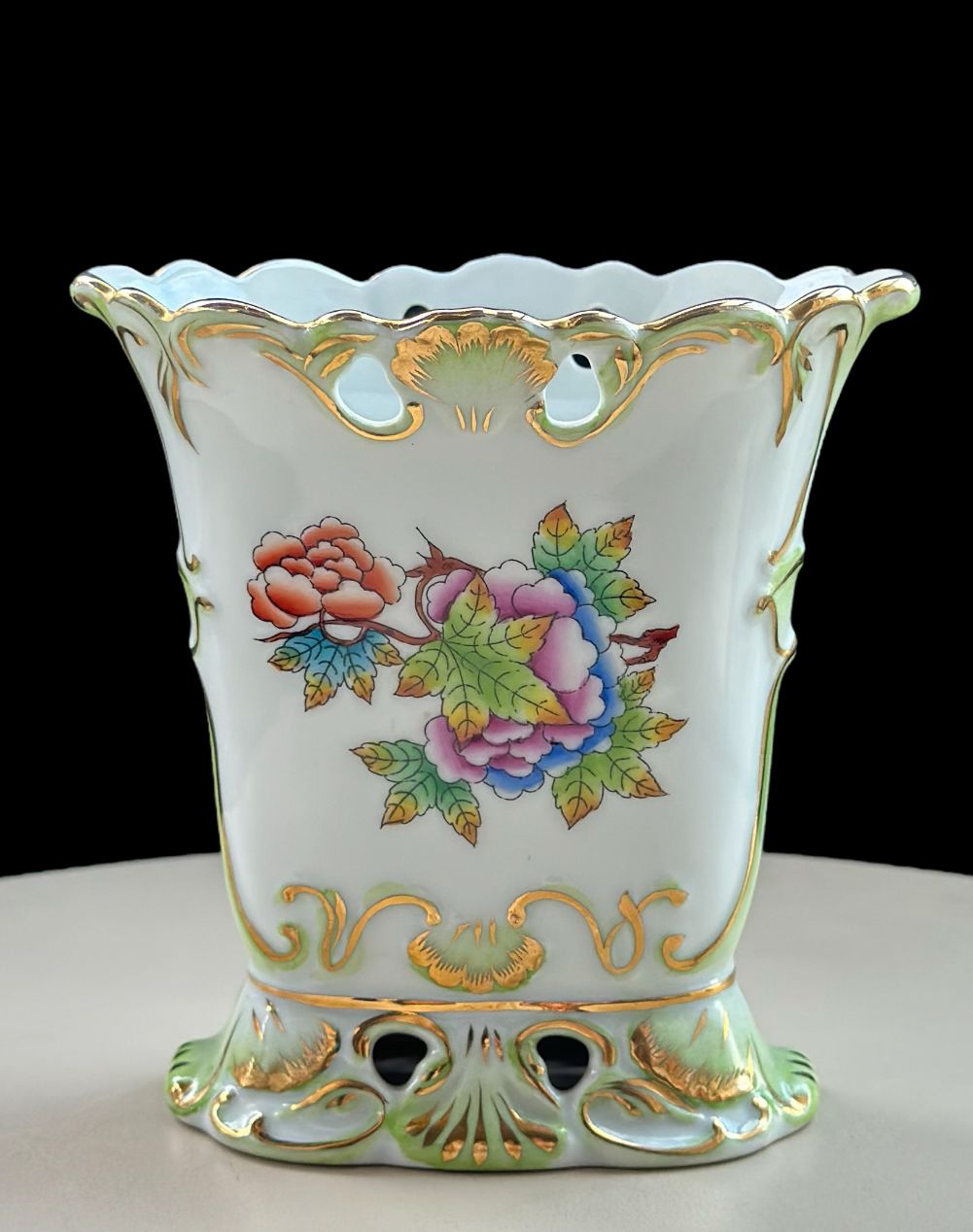
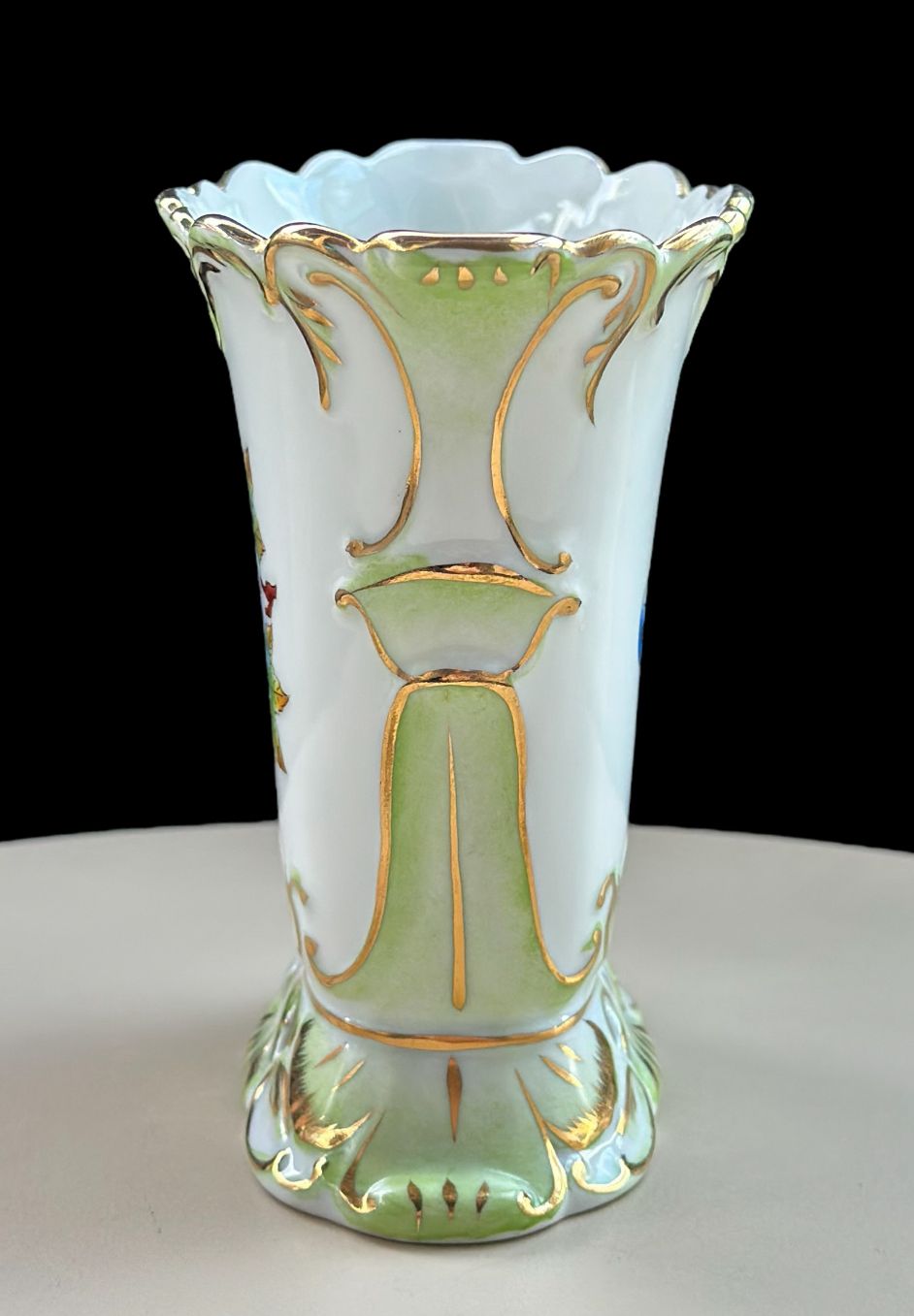
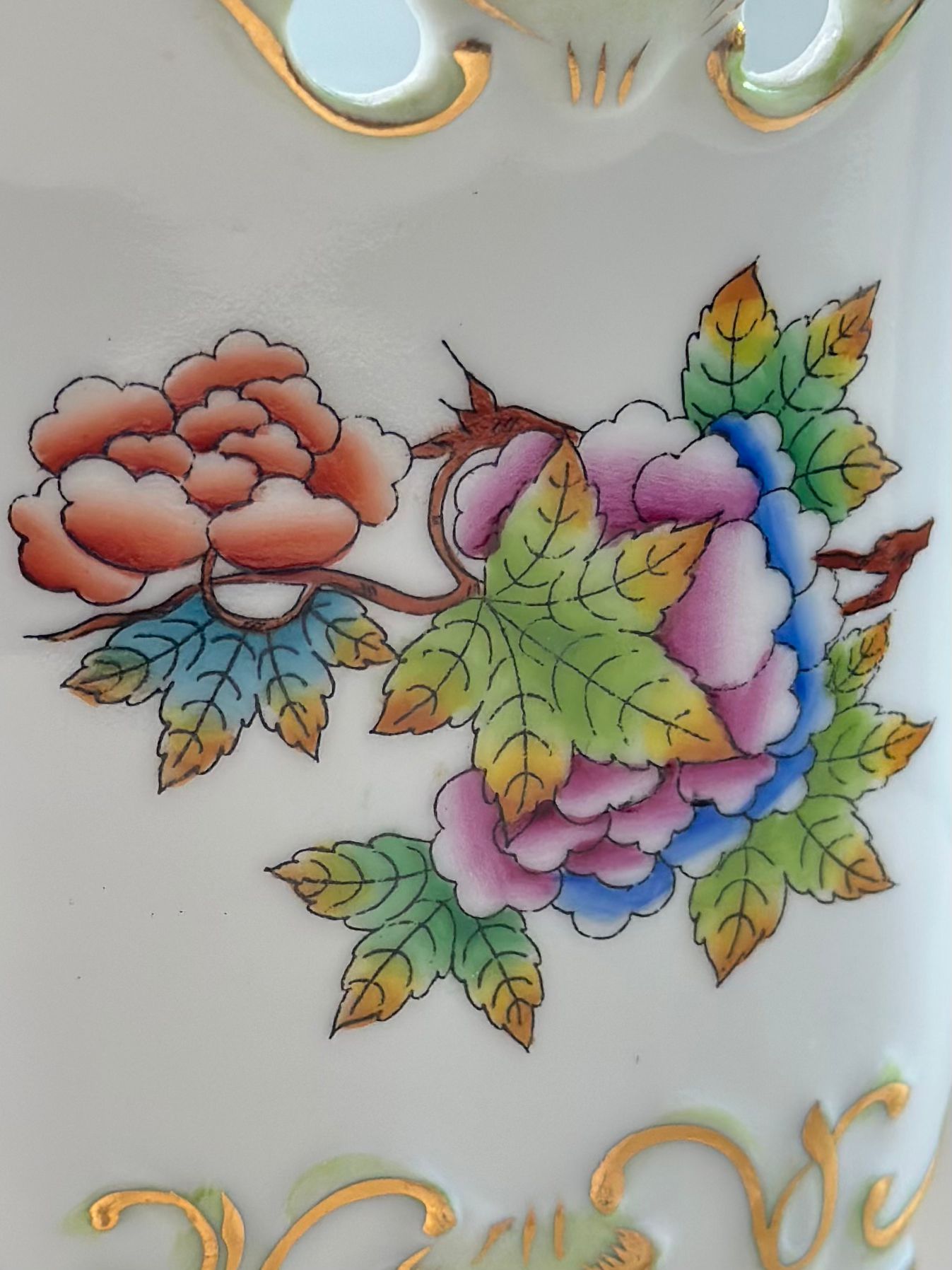
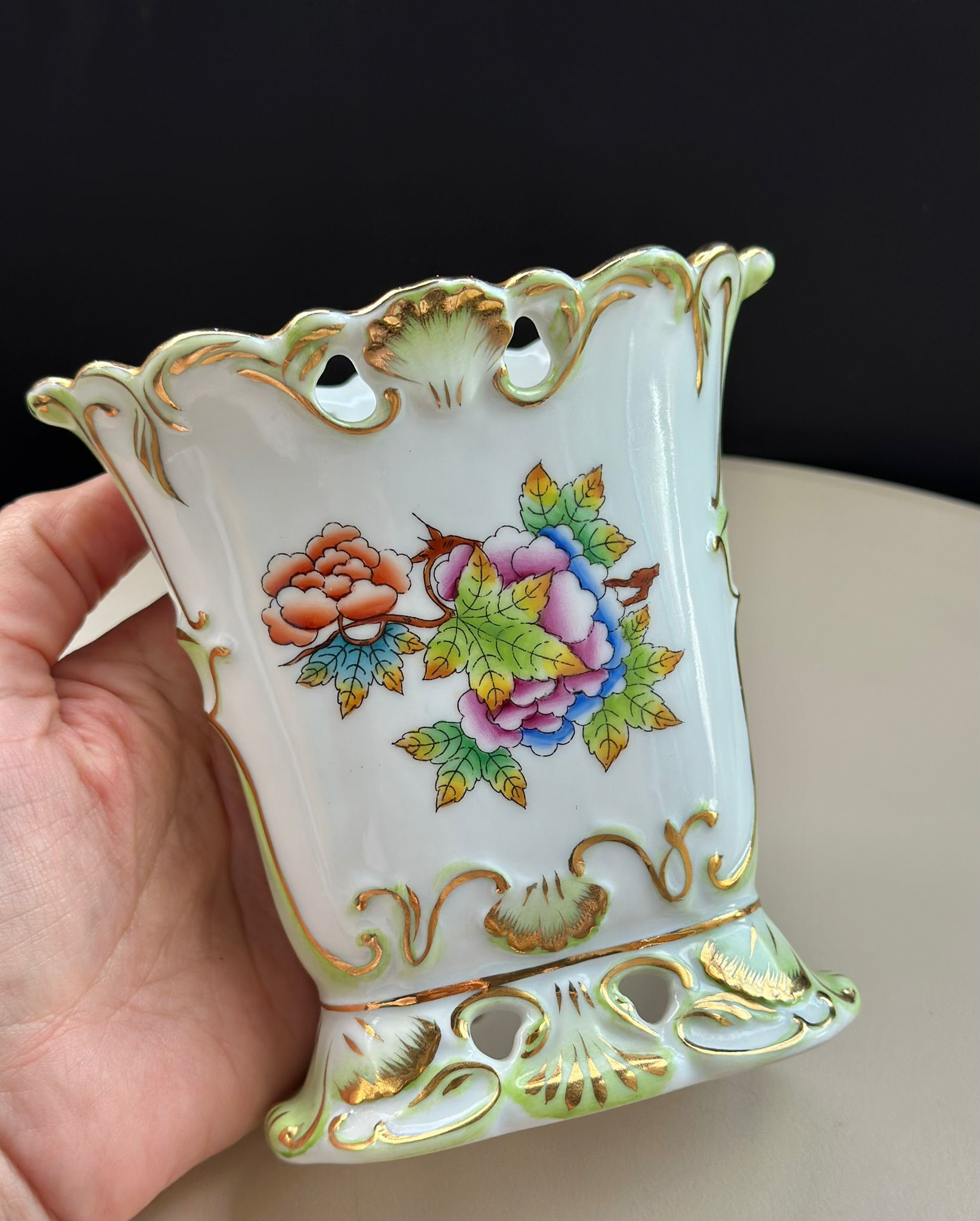
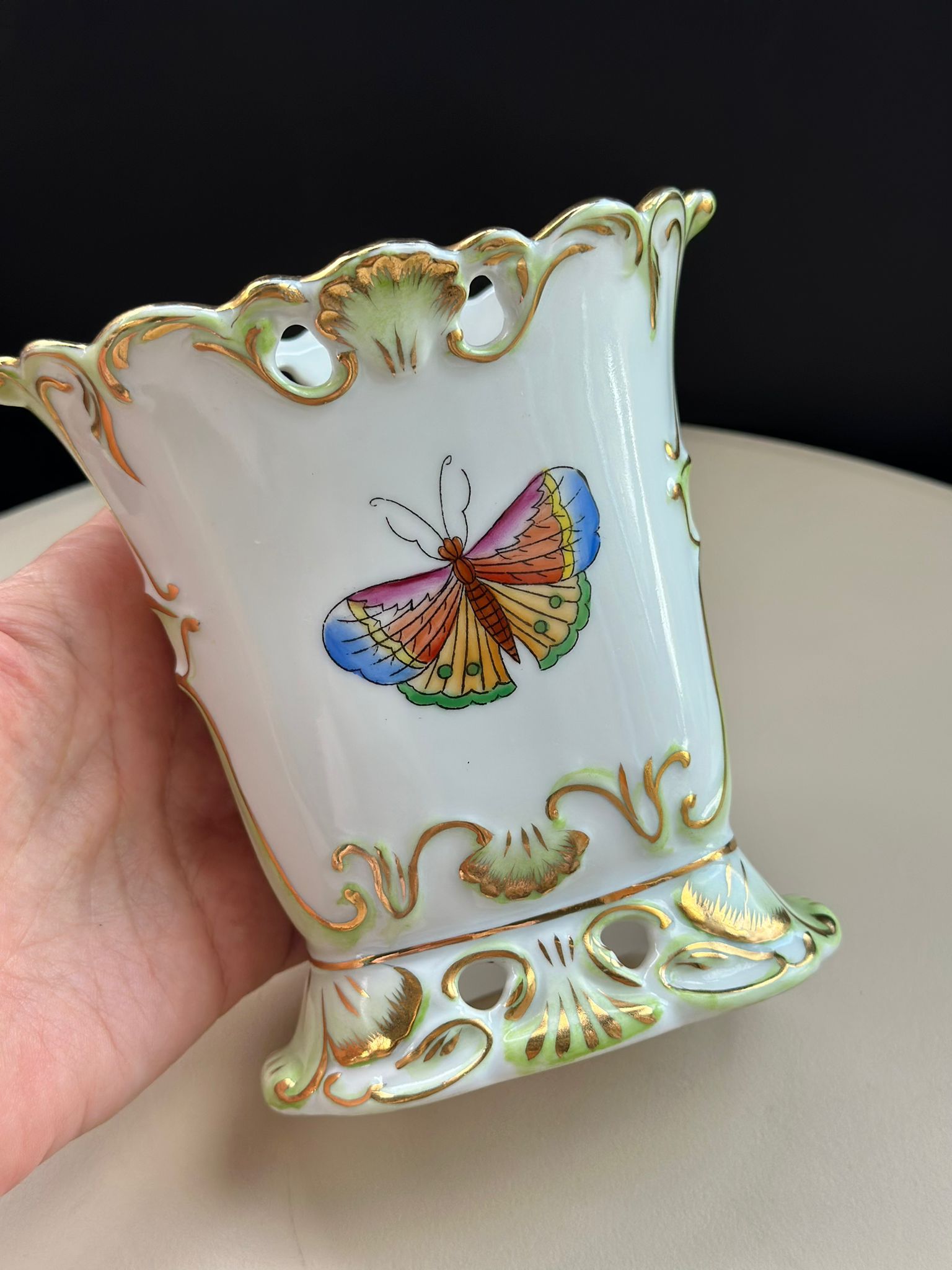
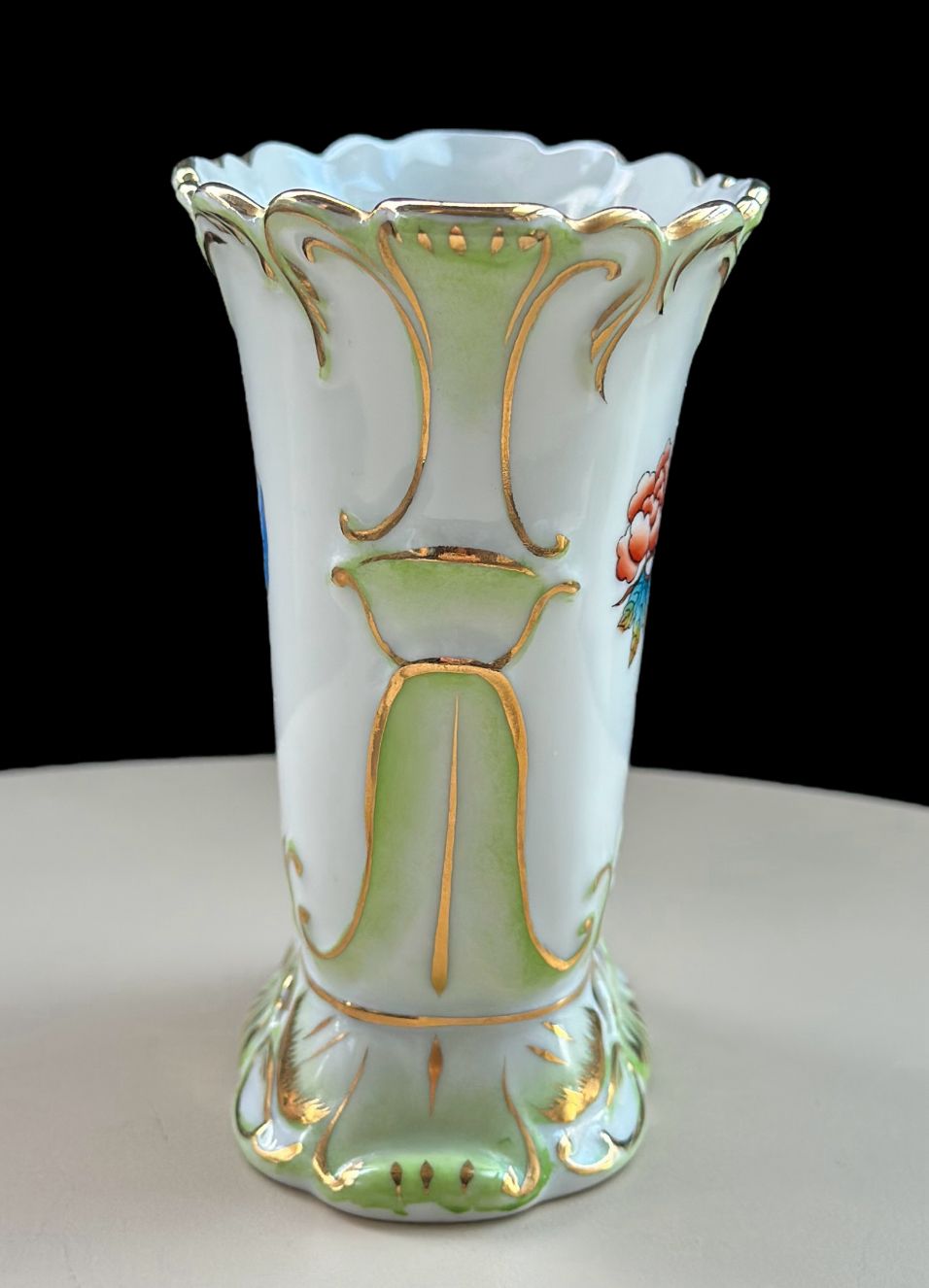
- Royal Recognition: Herend became famous in the mid-19th century when it began receiving commissions from the Habsburg dynasty and European aristocracy. It earned international acclaim at the Great Exhibition in London (1851), where Queen Victoria purchased a dinner service with a pattern that was subsequently named for her.Main Pattern Style: The floral pattern is reminiscent of the “Apponyi” pattern (also known as the Chinese Bouquet pattern), which is characterized by the central flower cluster and its sweeping leaves. The Apponyi pattern is itself a simplified version of the earlier, more complex “Famille Verte” patterns adapted from Chinese porcelain.Color Scheme: The particular flowers and prominent green/gold rim and shell-like accents suggest a variation of the Apponyi pattern.
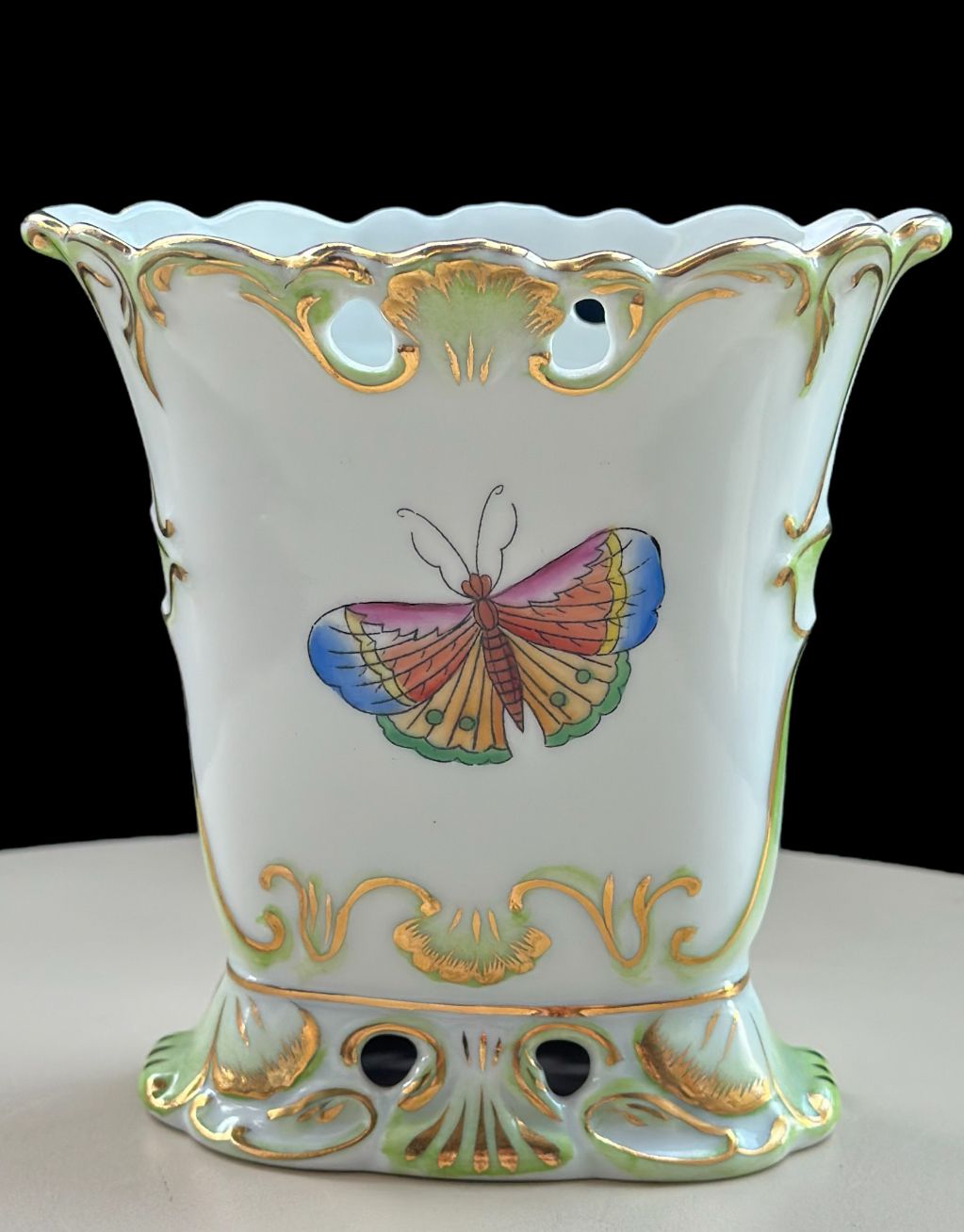
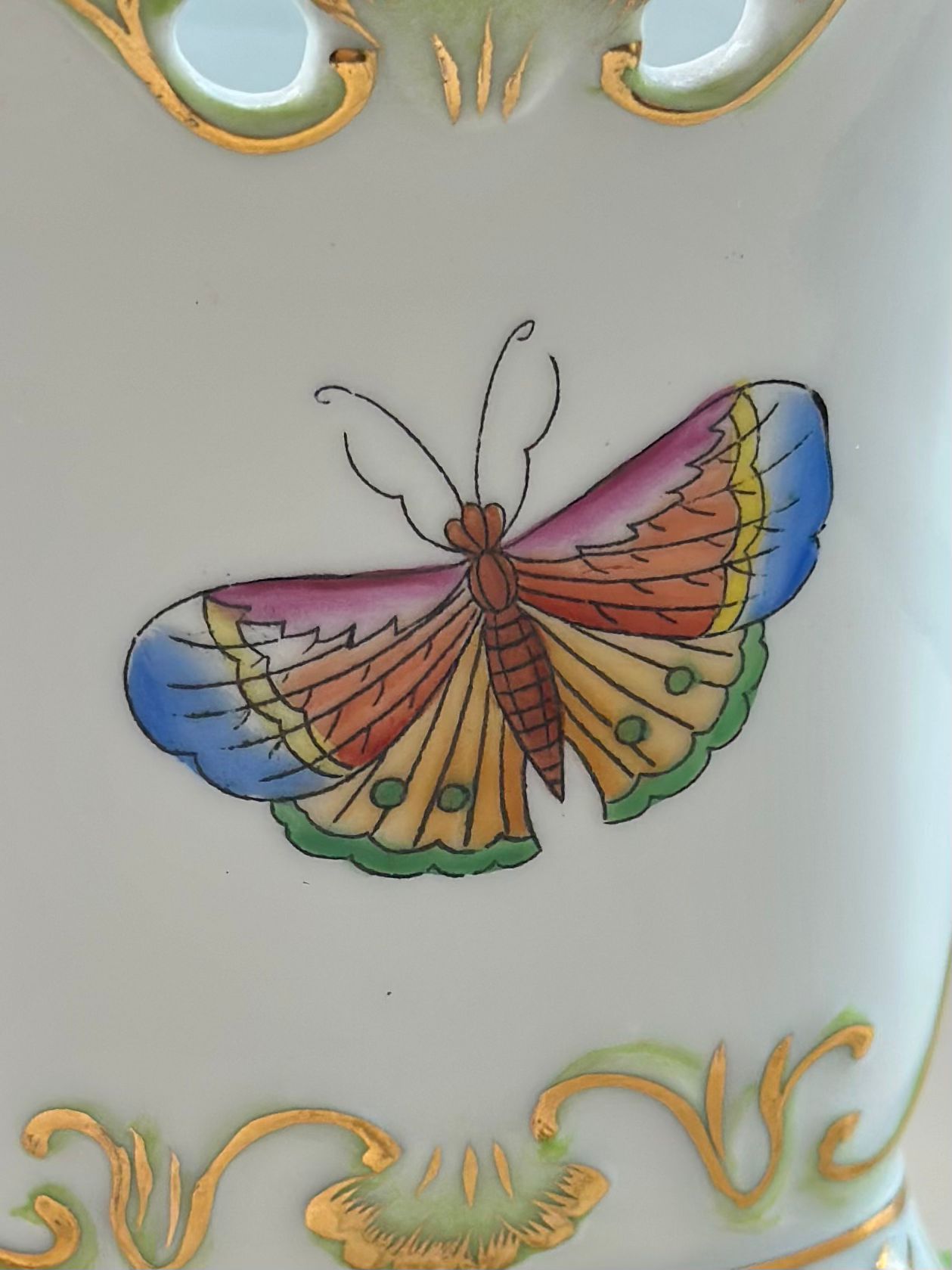
The Butterfly: The colorful butterfly is a specific detail often added to Herend pieces, sometimes as part of a larger pattern or, as in this case, as a distinctive focal point.
The “Additional information” section lists the dimensions/parameters for calculating shipping cost, not the item’s actual weight.